The success of a private residential plumbing setup relies heavily on factors that are completely invisible to the average homeowner. While the concrete holding container receives the majority of the attention during routine maintenance, the actual physical processing of your household wastewater happens deep within the surrounding earth. The specific geological composition of your garden dictates exactly how efficiently liquid effluent can safely dissipate into the ground. When property owners fail to understand the complex relationship between their buried holding tank and their specific local soil type, they frequently experience highly unexpected, deeply unpleasant structural failures. Understanding your property's exact topography and soil density is absolutely essential for calculating a safe, highly effective maintenance schedule.
Soil is not a uniform material; it varies wildly from one street to the next. The ideal environment for an underground distribution field consists of loose, sandy loam or highly porous gravel. In these specific environments, the microscopic gaps between the individual soil particles are relatively large. This high porosity allows the clarified liquid leaving your main holding tank to percolate downwards quickly and efficiently, naturally filtering out remaining impurities before reaching the deeper groundwater table. Properties blessed with this highly porous, sandy earth generally enjoy incredibly forgiving plumbing systems that can comfortably handle temporary spikes in daily water usage without backing up into the house.
However, a significant number of rural and semi-rural properties are built upon heavy, highly compacted clay soils. Clay particles are microscopic and flat, completely lacking the large, open gaps found in sandy environments. When clay soil becomes wet, these flat particles swell and bind tightly together, creating an incredibly dense, nearly impermeable barrier. If your underground distribution trenches are buried in heavy clay, the liquid effluent leaving your holding tank drains at an incredibly slow, severely restricted pace. The earth simply cannot absorb a massive, sudden influx of water from a busy household. This slow percolation rate means the primary holding tank must function flawlessly, acting as a massive, completely unobstructed buffer zone.
If you own a property situated on heavy clay, allowing dense solid waste to accumulate inside your primary container is a highly dangerous mistake. When a tank becomes overloaded with thick sludge, it completely loses its ability to safely hold and settle incoming wastewater. The liquid is rushed violently through the chamber, carrying suspended solid matter directly into the slow-draining clay trenches. Because the clay already struggles to absorb clear liquid, the introduction of thick, sticky organic solids instantly seals the few remaining microscopic pores. The distribution field experiences an immediate, total hydraulic lock, forcing dark, highly contaminated water directly to the surface of your garden or backwards into your downstairs bathrooms.
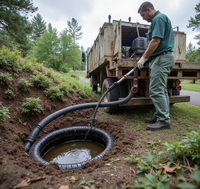
Managing a heavy clay property requires a significantly more aggressive, highly disciplined approach to mechanical maintenance. You absolutely cannot rely on standard, relaxed timelines recommended for sandy, porous environments. To protect the highly fragile, slow-draining trenches, you must ensure the primary concrete chamber remains as empty as physically possible. Scheduling Septic Pumping in Sparta NJ on a highly accelerated routine guarantees that the dense bottom sludge never reaches a dangerous, overflowing height. A clean, completely empty tank provides the maximum possible holding volume, allowing your household water to sit safely while the heavy clay soil outside slowly and steadily absorbs the previous day's effluent.
Working successfully with your local geology requires respecting its strict physical limitations rather than fighting against them. You cannot change the fundamental density of the earth beneath your lawn, but you have complete control over the volume of waste stored inside your buried concrete container. By accurately acknowledging your heavy soil conditions and adjusting your professional extraction schedule accordingly, you actively defend your most expensive home utility. Consistent mechanical clearing removes the heavy burden from your fragile clay trenches, ensuring your entire plumbing network operates safely, efficiently, and completely free from horrific, ground-level sewage floods.
Conclusion
Heavy clay soils absorb household wastewater at a severely restricted pace, making them incredibly vulnerable to sudden hydraulic failure. Highly frequent mechanical extractions ensure your primary holding tank provides the maximum buffer capacity needed to protect these slow-draining environments.
Call to Action
Defend your fragile soil trenches from dangerous solid waste contamination by booking a highly rigorous mechanical tank extraction with our expert team today.