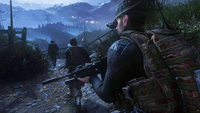
Zodiac matters because it drops Warzone Resurgence into the Open Beta from August 28 through September 1, giving players a mode that asks very different questions from tight multiplayer maps. If you're lining up sessions with friends or comparing notes through Bot Lobby MW4, the useful mindset is not "more multiplayer," but "a short, unstable first look at a large-scale survival mode." The map is confirmed for Weekend Two, yet many of the details that decide whether a match feels tactical or chaotic remain under wraps.
That uncertainty is exactly why Zodiac deserves dedicated time. A beta weekend is too short to master every route, but it is long enough to learn where fights naturally gather, how quickly distant gunfire turns into a third-party pileup, and whether the current audio mix gives you enough warning before a squad crashes your position.
1 Why Is Zodiac More Than a Side Activity?
Resurgence changes the value of nearly every decision you make. In standard 6v6, dying can be annoying but the next round begins quickly; on a larger map, one rushed push can remove your team's momentum, force a risky recovery, or leave a surviving teammate trying to reset against several nearby squads. That creates pressure even before exact circle timing and respawn conditions are known.
Modern Warfare beta multiplayer is likely to teach you the basics of weapon recoil, movement responsiveness, and sound cues. Zodiac will test whether those lessons still hold when sightlines stretch farther, enemies arrive from several directions, and cover is not always close enough to save a damaged player.
\u25c6 A strong multiplayer loadout may still feel awkward when fights begin at range and finish inside cramped interiors.
\u25c6 Gunfire is not only a threat; it is information that pulls other squads toward an unfinished fight.
\u25c6 A clean elimination is less valuable if it leaves your team exposed while armor, ammo, and positions are weak.
Players should treat the first few matches as reconnaissance rather than a scoreboard chase. Notice where teams land, which structures become repeat fight zones, and how long it takes for a loud engagement to attract another squad. Those observations will be more useful than trying to memorize every corner immediately.
2 What Will the Unknown Rules Change?
The biggest open questions are not cosmetic. Exact Resurgence behavior, circle speed, map layout, and possible limited-time modifiers will shape the pace of every match. A forgiving return system encourages aggressive trading and constant pressure; a stricter one makes survival, cash control, and safe rotations much more important. Until players get hands-on time, anyone claiming a settled meta is guessing.
Circle behavior can also decide whether Zodiac rewards early movement or late patience. Fast closures punish teams that linger over loot, while slower ones give squads more room to gather resources and set traps around likely routes. The first evening should reveal which style the beta build favors.
\u25c6 If respawns are frequent, stay close enough to support teammates without stacking in one doorway.
\u25c6 If circles move quickly, prioritize vehicles, rotation options, and a reliable way to cover open ground.
\u25c6 If limited-time rules amplify action, assume every prolonged firefight will draw extra attention.
There is a practical reason to avoid copying the habits of public-match veterans too early. Beta settings can shift, and a map's early player population tends to make hot areas feel hotter than they may become later. Test a few landing patterns: one contested location, one quieter edge location, and one flexible drop where your team can redirect after spotting nearby parachutes.
3 How Should You Spend a Limited Beta Weekend?
The smart move is to schedule Zodiac deliberately instead of opening it after hours of standard multiplayer. A tired final match rarely teaches much, especially in a mode where spacing, callouts, and rotations matter more than raw aim. Give the map a focused block of time while your squad is ready to communicate.
1) Use the first session to identify high-traffic zones, common approaches, and any buildings that repeatedly create close-range fights.
2) Use the second session to test rotations from those zones, including what happens when another squad hears the fight.
3) Use later matches to settle on roles: one player watching long lanes, one carrying utility, and one making quick route calls.
Don't obsess over perfect routes during a brief test window. The better target is a shared team instinct: when to disengage, when to chase a weakened squad, and when a win is not worth the noise it creates. If your group is also weighing time spent in Bot Lobby MW4 for sale, keep Zodiac practice grounded in real match habits rather than artificial expectations. The beta's real value is learning how your squad reacts when the map turns one fight into three at once.