Creating original content has become increasingly important for students, teachers, writers, researchers, publishers, and businesses. Whether someone is preparing an academic assignment, publishing an article, or producing website content, originality helps establish credibility and trust.
A verificador de plagio is a tool designed to identify similarities between submitted text and content that already exists elsewhere. These tools can help users discover potentially copied passages, review citations, and identify areas that may require rewriting or attribution.
As artificial intelligence becomes more common in content creation, plagiarism checking is also evolving. Tools such as Plagium AI Detector are associated with modern approaches to examining written content and identifying possible similarities or AI-related characteristics.
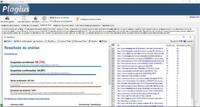
The Spanish phrase verificador de plagio translates roughly to “plagiarism checker.” It refers to software or an online service that analyzes written material to identify similarities with other available content.
A plagiarism checker may compare text against indexed web pages, documents, publications, or other sources depending on the system's database and capabilities.
The purpose is not necessarily to determine that a person intentionally copied something. Similar wording can sometimes occur because of common terminology, quotations, technical language, or properly cited material.
For this reason, plagiarism reports should generally be treated as a starting point for review rather than an automatic judgment.
Originality is particularly important in academic and professional environments.
For students, checking an assignment before submission can help identify passages that need citations or better paraphrasing.
For businesses and publishers, reviewing content can help reduce accidental duplication and protect the quality of published material.
A plagiarism checker can therefore be useful for:
The earlier potential similarities are identified, the easier they can be addressed.
A typical plagiarism detection system analyzes text and looks for similarities between the submitted material and content available in its comparison sources.
The process may involve:
Different platforms use different technologies and databases, so results can vary between services.
A passage that receives a similarity match does not automatically mean it represents plagiarism. Context remains important.
The term Plagium AI Detector combines two increasingly important areas of content analysis: plagiarism detection and artificial intelligence.
AI-assisted content tools can analyze language patterns at a scale that would be difficult to review manually. Depending on the platform and its current features, users may be able to investigate whether text resembles existing material or whether it displays characteristics associated with machine-generated writing.
It is important to distinguish these functions.
Plagium AI Detector generally focuses on similarities between text and existing sources.
AI detection attempts to estimate whether writing may have been generated or substantially assisted by an AI system.
These are different analytical tasks and should not automatically be treated as interchangeable.
Many people assume that an AI detector and a plagiarism checker perform the same job. They do not.
A plagiarism checker primarily looks for textual similarities or matching material.
An AI detector, on the other hand, attempts to analyze linguistic or statistical patterns that may be associated with AI-generated text.
For example, completely original writing can potentially be flagged by an AI detector because it resembles patterns associated with machine-generated language. Similarly, AI-generated text may not necessarily contain direct matches with existing online sources.
This distinction is important when interpreting any content-analysis report.
Students regularly work with information from books, websites, academic papers, lectures, and other resources.
During research, it can be easy to use wording that is too close to the original source without realizing it.
A verificador de plagio can help students review their drafts before submission.
It may help them identify:
The goal should be learning how to properly use sources rather than simply trying to achieve a particular similarity percentage.
Website owners and content teams also benefit from originality checks.
Search-focused content often covers subjects that have already been discussed by hundreds of websites. Similar topics are normal, but copying another site's wording can create quality and copyright concerns.
A plagiarism review can help editors identify sections that may need to be rewritten in a genuinely original voice.
For publishers producing large volumes of articles, automated checking can also become part of a broader editorial workflow.
A common mistake is to assume that every matching phrase represents copied content.
Certain words and phrases are difficult to avoid.
For example, technical descriptions, legal terminology, scientific names, product specifications, and common expressions may naturally appear in multiple documents.
A proper report should therefore be interpreted in context.
Consider:
These questions provide a more meaningful assessment than a single percentage.
Using a plagiarism checker is only one part of creating original work.
Writers can improve originality by developing their own structure and explaining information in their own words.
Useful practices include:
Read several reliable sources and understand the topic before beginning the draft.
Record ideas and important facts rather than copying complete sentences into your working document.
A genuine paraphrase changes both wording and sentence structure while preserving the original meaning.
When an idea, quotation, statistic, or finding comes from another source, provide appropriate attribution.
Original explanations, examples, comparisons, and conclusions can make content more distinctive and valuable.
A plagiarism report is most useful when it becomes part of the editing process.
Instead of checking an article only after it is finished, writers can review important sections while drafting.
A practical workflow might look like this:
Draft → Review Sources → Check Similarity → Revise → Cite → Final Proofread
This process can help identify problems before publication or submission.
Modern content-analysis tools can process large amounts of text much faster than manual comparison.
Potential benefits include:
However, automated results should still be reviewed by a person, particularly when the consequences of an originality decision are significant.
When evaluating a verificador de plagio, users should consider more than the percentage displayed in the final report.
Important factors may include:
A useful report should help the user understand where similarities appear rather than simply providing one overall score.
Content submitted to an online checker may contain private or unpublished information.
Before uploading sensitive documents, users should review the service's privacy policy and understand how submitted text is handled.
This is particularly important for:
Users should avoid uploading sensitive content to an unfamiliar platform without understanding its data practices.
No automated system can provide an absolute guarantee of originality.
A plagiarism checker can only compare content against the sources it can access. Material that is not included in its database may not be identified.
Likewise, a low similarity score does not automatically mean that a document is academically or legally acceptable.
Originality involves more than matching percentages. Proper attribution, independent expression, accurate research, and responsible use of sources are all important.
Artificial intelligence is changing both content creation and content analysis.
As more people use AI-assisted writing tools, editors and educators are increasingly interested in understanding where text comes from and whether it overlaps with existing material.
A solution such as Plagium AI Detector may be relevant to users interested in combining modern content analysis with originality checks.
Nevertheless, AI detection results should be interpreted carefully. No detector should be treated as an infallible authority about how a particular piece of text was created.
Verificador de plagio is Spanish for “plagiarism checker.” It generally refers to a tool that examines written content for similarities with existing sources.
Plagium AI Detector refers to an AI-oriented content analysis approach associated with checking written material for potential plagiarism or AI-related characteristics, depending on the available service features.
No. A similarity score is an indicator that requires interpretation. Common phrases, quotations, technical language, and correctly cited material can all produce matches.
No. Detection depends on the sources and databases available to the particular service. No checker can guarantee that every possible instance of copied material will be identified.
A preliminary originality check can be useful because it gives students an opportunity to identify missing citations or overly similar wording before submission.
Yes. Common phrases, technical terminology, quotations, and similar descriptions can appear in multiple documents even when the writer did not copy them intentionally.
A verificador de plagio can be a valuable part of a responsible writing and editing process. It helps users identify potentially similar passages and provides an opportunity to improve citations, paraphrasing, and overall originality.
At the same time, plagiarism detection should not be confused with AI detection. Tools such as Plagium AI Detector represent the broader movement toward automated content analysis, but their results should always be considered alongside human judgment and the context of the document.
The strongest approach is simple: research carefully, write independently, credit your sources, review questionable similarities, and use automated tools as assistance rather than as the only measure of originality.
See more blogs: Visit Here